History
The history of single malt whisky — and of Scotch whisky itself — begins in the 5th to 6th century, with distillation techniques brought in by missionaries. From there to the present day, the road has been full of hardship and adversity — and through it all, whisky never stopped developing.
The arrival of the malt tax — levied on malt, the main ingredient of malt whisky — sharply increased the tax burden on whisky, and an outright ban on distilling followed, opening the era of illicit stills. In the end, the law could only do so much; through reform of the excise laws, the tax on malt was lowered and legal registration was encouraged.
From the late 19th century into the early 20th, however, it was not the strongly individual single malt that thrived but the smooth, crowd-pleasing blended whisky. Blends used not only pricey malt but cheap grain alongside it, so they carried a real advantage on price as well.
Yet perhaps that easygoing taste — once the great strength — turned into dullness, because interest in its polar opposite, single malt, kept growing. The trouble was that the single malts of the day were so intensely individual that most people would not dream of drinking them. Single malt was seen as nothing more than an ingredient for making blended whisky.
That perception began to crack when a distillery called Glenfiddich released a single malt with approachable character at a reasonable price. People had avoided single malts because the personality was simply too strong; Glenfiddich kept the personality — the whole point of difference from blends — but dialed the intensity to a level that let ordinary drinkers step in. It is no accident that Glenfiddich 12 and 15 are still named among the go-to recommendations for single malt beginners today.
The popularity that started with Glenfiddich has never cooled — it sets a new record by the day. I too prefer single malt to blended whisky. My own first single malt was actually a Balvenie DoubleWood, but that was only possible because Glenfiddich opened up the market — something I remain grateful for.
Characteristics of Single Malt Whisky
The name itself tells you two things: a single distillery, and malt as the only grain.
On top of that, single malt whisky is distilled in copper pot stills. Thanks to the copper’s influence, the flavors and aromas come through richer.
And because everything in the bottle comes from one distillery, the region where that distillery sits shows clearly in the taste. The regions divide into five: Speyside, Highland, Lowland, Islay, and Campbeltown. Let me go through each.
Speyside offers such favorable conditions for whisky-making that more than half of Scotland’s distilleries are packed into it. Its signature is light and sweet, with fruit and flower characters shining through.
The Highlands are vast, with distilleries scattered far apart — so even within the one region, each distillery’s character stands distinctly on its own, and summing up the region as a whole has its limits. Coastal distilleries carry a maritime note, while those near Speyside lean into fruit.
Next, the Lowlands. Comparatively warm and flat, the region produces whiskies with a light, delicate feel — gentle peat joined by flowers, grass, and citrus.
Islay whiskies are peated, smoky, and intense, with flavors that call to mind iodine, seaweed, medicine, and the sea. One example: someone once described the whisky of a distillery called Laphroaig as tasting and smelling “like every medicine bottle in a wooden hospital was smashed and the whole place set on fire.” As that description suggests, this is a region people either love or cannot stand.
Last, Campbeltown. Its whiskies carry a touch of saltiness with heavy, complex, powerful flavors. Springbank — the distillery on everyone’s lips for a while now — calls Campbeltown home.
Famous Distilleries
Let me sort the distilleries by region as well.
Starting with Speyside: Glenfiddich, Macallan, Glenlivet, Balvenie, GlenAllachie, Glenfarclas, and more. Of the so-called big three of sherried whisky — Macallan, Glenfarclas, and GlenDronach — two sit in Speyside. Add Glenfiddich, which set the single malt wave in motion; Balvenie, which at one point had lines forming outside liquor shops before opening; and GlenAllachie, the new sherry powerhouse — all Speyside. With over half of Scotland’s distilleries in this one region, the famous names come thick.
Next, the Highlands. GlenDronach, the third of the sherry big three, is here — along with Dalmore, which appeared in Kingsman; Edradour, whose intensely dark sherried whiskies have startled many a drinker; and Glenmorangie, owner of the longest still necks in Scotland.
In the Lowlands there was Rosebank — closed, yet releasing its remaining stock in limited quantities each year at steep prices — and Bladnoch, famous for its handsome square bottle and a taste that outruns expectations.
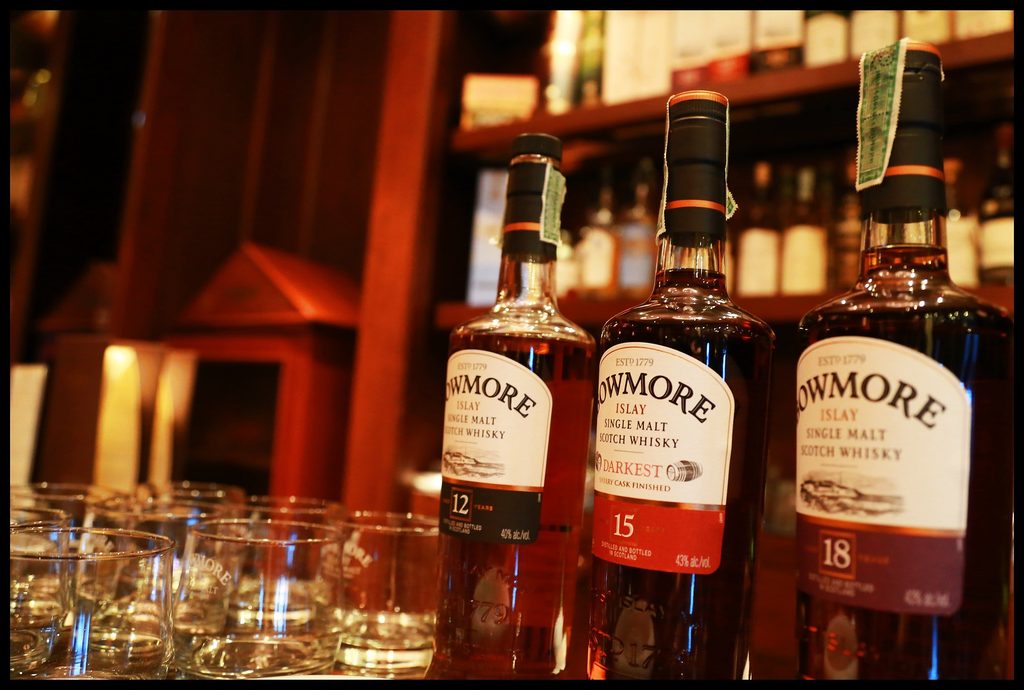
On Islay stand the peat big three — Lagavulin, Laphroaig, and Ardbeg — plus Bowmore, renowned for sherried peat.
Finally, Campbeltown. This is home to Springbank, whose bottles still sell above retail to this day, along with its sister brands Longrow and Hazelburn, and Kilkerran from the family’s Glengyle distillery.
Next up: “What Is Blended Whisky: History, Characteristics, and Famous Distilleries” [LINK: pending]
Thank you for reading.
Leave a Reply